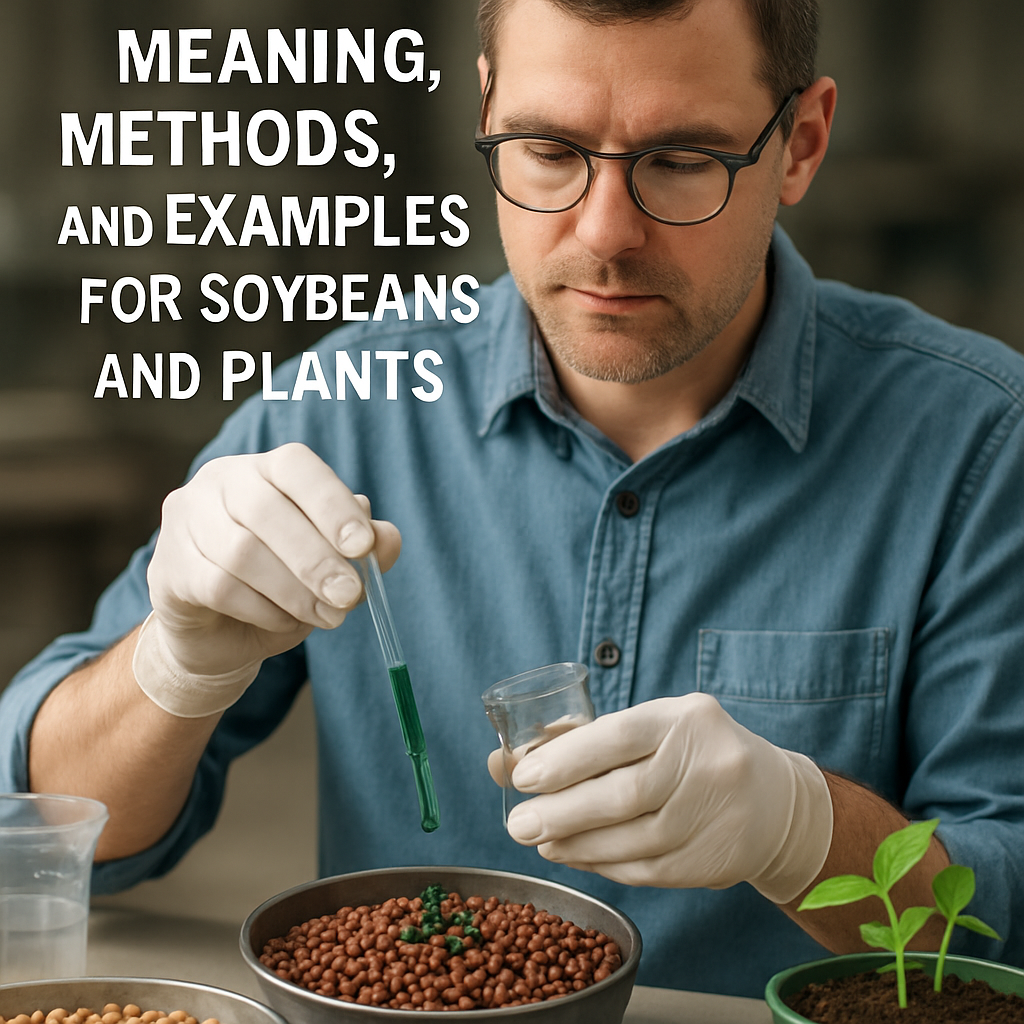
Seed inoculation refers to the technique of coating seeds with beneficial microorganisms specifically to support plant growth under a variety of soil conditions. This method is especially important for crops like soybeans, as effective inoculation helps ensure the presence of nitrogen-fixing bacteria, leading to improved yields and healthier plants. By understanding the meaning, proven practices, and real-world examples of seed inoculation, growers can optimize plant development and nutrient uptake as part of a science-based approach to agriculture.
Understanding the Concept and Purpose
When discussing seed inoculation, it is essential to recognize its core definition: coating seeds with living microbes to help them thrive even in poor soils. Most commonly, the focus is on leguminous crops such as soybeans, where the partnership with nitrogen-fixing bacteria like Rhizobium or Bradyrhizobia japonicum enables the conversion of atmospheric nitrogen into a plant-usable form. This relationship substantially reduces a crop's dependence on synthetic fertilizers and boosts sustainability (ScienceDirect Overview).
The rationale for inoculation is to introduce these helpful bacteria where they are absent or in inadequate supply, making sure young plants get the head start needed for vigorous growth. In soils where compatible bacteria are already abundant, additional inoculation may enhance yields further, while in previously uncultivated or depleted fields, inoculation is often necessary for successful legume production.
Not only does this technology support conventional agriculture, but it also underpins many sustainable and organic management systems. Taking the time to inoculate seeds, especially soybeans and other legumes, is a low-cost, high-impact practice.
Key Seed Inoculation Methods for Soybeans
There are multiple seed inoculation methods, each designed to maximize microbial survival and symbiotic performance. For soybeans, three widely used techniques are:
- Slurry Method: Seeds are moistened with a solution containing adhesives such as gum arabic or carboxymethylcellulose. Then, peat-based inoculant is added and thoroughly coated onto the seeds. This is simple and effective for most field applications (Hawaii CTAHR Module).
- Pelleting: After the initial microbe coating, the seeds are rolled in fine powders such as calcium carbonate or rock phosphate to create a protective outer layer. Pelleting helps buffer the bacteria from soil acidity and prolongs their life on the seed surface.
- Liquid Inoculation: Some commercial products use a liquid formulation that allows uniform dispersion and easy mixing. Liquid inoculants often suit modern seeding equipment, minimizing clogging and ensuring efficient application (Iowa State Extension).
Choice of method depends on the crop, farm scale, environmental conditions, and available products. For best results, seeds should be planted immediately after inoculation to safeguard the microbes from desiccation and sunlight.
Furthermore, the effectiveness of different approaches can be influenced by the type and freshness of inoculant, handling procedures, and seed quality, making proper technique and timing paramount.
Examples and Specific Applications
Practical applications of seed inoculation span from small-scale gardens to commercial soybean fields. For example, soybean growers routinely employ peat-based powder or liquid inoculants to introduce Bradyrhizobia to their crops, helping ensure efficient nitrogen fixation even in fields with a history of soybean production (Iowa State Extension).
Legume pasture seeds, such as those for alfalfa or clover, are often pelleted both to protect sensitive bacterial strains and to facilitate precise mechanical seeding. Mycorrhizae inoculation is sometimes incorporated for crops that benefit from enhanced phosphorus uptake, further widening the spectrum of possibilities for seed treatments.
Research trials have compared distinct products and methods, showing that while nearly every approach improves plant performance in deficient soils, the magnitude of benefit can vary with soil type, crop rotation history, and strain selection.
This real-world evidence underscores the importance of tailored inoculation strategies that suit both crop requirements and site-specific conditions.
Special Considerations for Treatment and Compatibility
When planning seed inoculation, consider compatibility with other agricultural inputs. Some fungicide or chemical seed treatments can adversely affect bacterial viability. If chemical seed treatment is necessary, growers should look for products labeled as compatible with microbial inoculants or apply the inoculant in a separate operation, just before planting.
Freshness is another vital factor; always use inoculant products well within their stated expiration dates as microbial populations decrease over time. Proper storage, ideally in cool and dark places, preserves microbial activity until use. Never expose inoculant-coated seeds to direct sunlight, high temperatures, or prolonged drying periods.
For growers using both commercial and organic seed treatment options, read the manufacturer's directions and refer to independent extension resources to ensure correct and effective application.
Adhering to these principles improves the odds of successful root nodule formation, leading ultimately to healthier, higher-yielding soybean and legume crops.
The Impact: Seed Inoculation in Modern Planting
Seed inoculation remains at the heart of efficient and sustainable plant production. From garden plots to large-acreage soybean operations, the careful use of microbial dressing and plant-beneficial bacteria can result in enhanced nutrient acquisition, improved growth, and reduced reliance on chemical fertilizers. The array of products and proven examples available highlights how integrating these inoculation methods is now standard practice for achieving consistent results in diverse environments (ScienceDirect - Seed Inoculation).
With the spread of research-backed techniques and field-tested products, the adoption of seed inoculation continues to gain traction in crop management, especially for legumes and nitrogen-hungry crops. This investment in biological seed technology delivers benefits that extend beyond yield, influencing soil health and the overall resilience of agroecosystems.
By understanding the meaning, appropriate methods, and practical applications of seed inoculation, growers are positioned to make better planting decisions and leverage natural biological processes for a productive and sustainable harvest.
Comments
Post a Comment