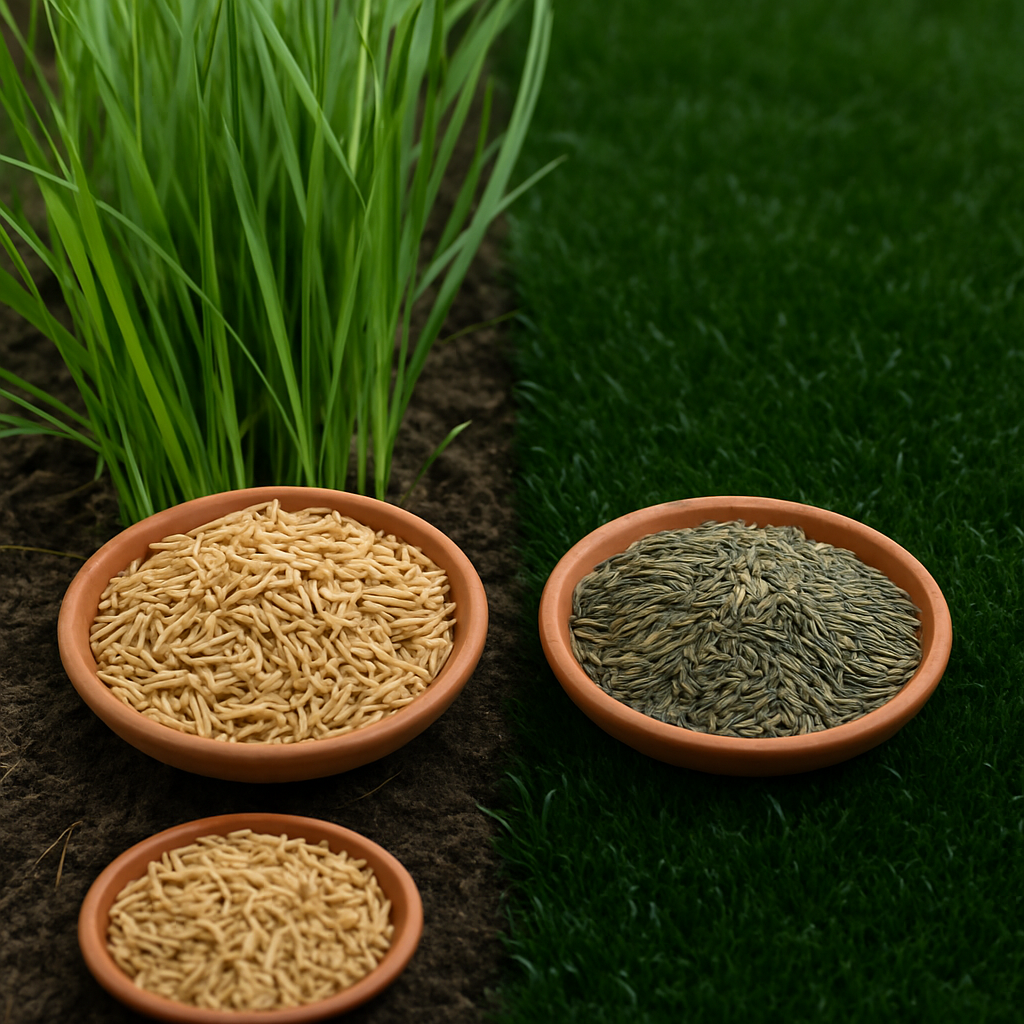
Understanding Rye Grass vs Kentucky Bluegrass for Your Lawn
For anyone choosing new turf, the direct decision between rye grass and Kentucky bluegrass shapes the look, feel, and resilience of your lawn. Rye grass is admired for exceedingly quick germination, while Kentucky bluegrass earns praise for its rich, darkest green turf and strong lateral spreading habit. If you're considering a blend to strike a balance between fast establishment and a lush, full look, it's important to understand how these varieties interact in seed mixes and the fundamental ways they differ. This guide will help you compare growth habit, seed use, and key lawn characteristics so you select the right blend for your yard.
Comparing Growth Habit and Lawn Density
The foundational difference between these grasses lies in their growth habit. Kentucky bluegrass is known for its rhizomatous, spreading nature, creating a thick, self-repairing turf that can recover from damage and fill in bare spots efficiently over time. This growth pattern makes it an excellent base for a durable, attractive lawn. In contrast, perennial ryegrass grows primarily in clumps, producing a dense, upright habit but without the same ability to spread laterally.
When used in a blend, ryegrass quickly occupies bare soil, minimizing erosion and weed infiltration, while Kentucky bluegrass gradually fills in empty patches, adding thickness with each season. This difference in growth habit is why Kentucky bluegrass is often praised for establishing the fullest, most uniform lawns over the long term (source).
The choice between these two may come down to your desire for immediate coverage versus sustained density. Rye grass acts as an effective nurse grass, supporting the slower-establishing bluegrass until it matures.
Combining the two can maximize both quick green-up and lasting thickness, especially important in lawns with high foot traffic or where bare spots have been an issue.
Seed Blends: Bulk Mixes and Overseeding Benefits
Seed blends of perennial ryegrass and Kentucky bluegrass are popular for bulk lawn establishment and overseeding tasks. These mixes are designed to leverage ryegrass's pre-germinating speed, usually sprouting within days, with bluegrass's more gradual but enduring turf presence that survives seasonal shifts well.
In regions where reseeding is frequent—such as sports fields or transition zones—blend or bulk seed products allow quick repair of damaged areas. Ryegrass covers the soil rapidly, improving the performance and visual appeal of the lawn while Kentucky bluegrass matures.
For those in cooler climates or who prefer mountain view master green style lawns, these combinations are ideal. Ryegrass thrives as a fast annual overseeder while Kentucky bluegrass ensures perennial, dark turf results for years.
Explore professional perspectives on real-world performance in lawn blends by watching detailed side-by-side comparisons (video source).
Color Differences: Darkest Green and Leaf Texture
One factor that stands out between these species is color. Kentucky bluegrass is celebrated for its naturally intense, darkest green or dark blue hue—a characteristic many homeowners desire for aesthetic appeal. Its finer, softer blades and unique leaf bloom contribute to a visually lush turf that stripes beautifully when mowed in patterns.
Perennial ryegrass, while healthy and attractive, offers a lighter, more medium-green color and a somewhat coarser blade texture. Its leaves are sleek but generally less dramatic in shade compared to bluegrass. Gardeners who prioritize lawn color or dream of that signature emerald look often select Kentucky bluegrass or seed blends with a higher proportion of it for maximum visual impact.
While both grasses have strong leaf structure, the overall impression is that bluegrass provides the deepest, most aesthetically striking turf available in cool-season lawns, especially in yards that receive ample sun and attentive care.
This color advantage can be an essential factor if you're aiming for the richest, most uniform appearance across all seasons.
Germination, Seedhead, and Maintenance Requirements
Germination speed is a clear area of contrast. Perennial ryegrass emerges very rapidly, often within 3–7 days of sowing, while Kentucky bluegrass may require up to three weeks or more to show noticeable growth (see details).
This quick start makes ryegrass a popular overseeding choice for repairing established lawns, providing an almost immediate carpet of green that can help prevent weed establishment while bluegrass develops below.
Both species can be found as part of various blend products, including lowes bulk options or master green strains, suitable for climates in Canada, 100 percent annual overseed, or mixed with white clover for alternative lawns.
Maintenance needs are similar in terms of mowing and feeding, but Kentucky bluegrass lawns may require attention to soil moisture and sunlight. Ryegrass tends to tolerate a wider array of soils and grows well even where conditions fluctuate.
Choosing the Right Grass for Your Lawn
Ultimately, deciding between rye grass and Kentucky bluegrass—or using a blend—should depend on your climate, expectations for color, tolerance for disease and fungus, and how quickly you want your lawn to establish. Kentucky bluegrass wins out in growth habit, density, and color, especially if you favor a perennial solution with the darkest green turf. Perennial ryegrass, meanwhile, can't be matched for fast germination and initial thick coverage, acting as an excellent overseed for shade or for quick repairs.
For those in transition zones or regions susceptible to drought, seeking out drought-tolerant Kentucky bluegrass varieties and combining them with ryegrass can maximize performance over time. Always consider the specific needs, such as whether you want to overseed bermuda, supplement with butterfly weed, or ensure grass can withstand fungus and other challenges unique to your area.
No matter your choice, properly maintaining your seed blend—watering correctly, feeding adequately, and mowing regularly—will help both ryegrass and bluegrass show their finest qualities and keep your lawn at its darkest, healthiest best.
Selecting the best combination of perennial ryegrass and Kentucky bluegrass seeds gives homeowners the flexibility to achieve optimal germination rates, perfect growth habits, and enjoy the look of a resilient, dark green lawn year after year.
Comments
Post a Comment