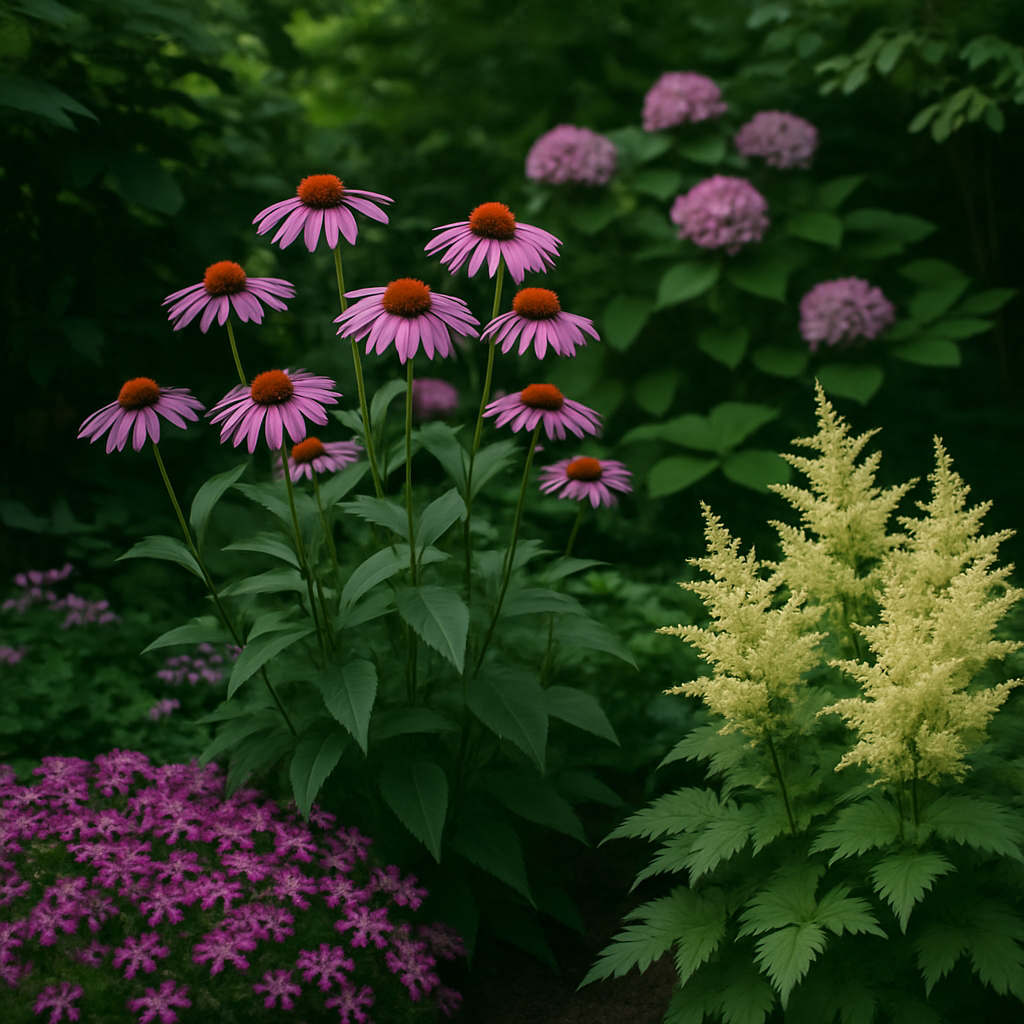
Thriving Blooms in Shaded Gardens: Your Summer Solution
If you want lasting color in gardens where sunlight is scarce, perennials for shade that bloom all summer are your best allies. These low-maintenance flowers and shade-loving shrubs offer continuous blossoms from late spring to fall, transforming dim corners into lush sanctuaries. By selecting varieties suited for shaded areas, you can enjoy enduring beauty without constant care, making even north and east-facing beds lively and inviting.
Key Characteristics of Shade Adapted Perennials
Plants that flourish in shade aren’t just tolerant of limited sunshine; many develop unique leaf structures and photosynthetic mechanisms optimized for their environment. Their leaves are often broader and thinner to maximize light capture, and their growth patterns favor extended blooming cycles over rapid vegetative development. Adaptability is high: some will even thrive as groundcover beneath larger shrubs and trees, softening hard edges and covering bare patches.
Many shade perennials, such as hostas, Carex pensylvanica, and shade-tolerant varieties of Geranium, offer both attractive foliage and persistent blooms. In addition, these varieties typically require less water and can withstand cooler, damper spots that challenge sun-loving plants. Choosing perennials that are both shade-tolerant and low maintenance lets gardeners reduce dependence on fertilizers and minimize regular upkeep. Explore authoritative information about shade-tolerant plants here.
Some of the most resilient bloomers include Astilbe, Japanese anemone, and bleeding heart, each bringing its own color palette and period of floral interest. Incorporate early, mid, and late blooming varieties to enjoy an uninterrupted display all summer long.
For those seeking year-round structure, evergreen shade perennials like certain ferns and hellebores not only keep their foliage through the seasons but may even flower outside the peak months, enriching the shaded landscape.
Choosing and Arranging Low-Maintenance Blooms
Select your flowers and shrubs by reviewing their specific sun and soil needs. While all shade perennials resist intense sunlight, some prefer deep shade, others thrive in dappled or part-shade environments. Ensure the chosen location offers enough indirect light, and amend with organic compost to boost drainage and moisture retention.
- Hostas: Available in many leaf sizes and colors, they bloom with lavender or white spikes through summer.
- Astilbe: Feathery plumes in shades of pink, red, or white bring vertical interest and dense color clouds.
- Toad lilies: Spotted, orchid-like flowers bloom persistently even in deep shade.
- Hydrangea: Specifically, Hydrangea arborescens varieties bloom reliably through hot and cool spells.
Remember, mulching helps regulate soil temperature and conserve moisture, both of which support continuous blooming. Cluster shade-loving perennials and low shrubs together for a visually rich, layered effect.
When designing with low maintenance in mind, avoid high-nitrogen fertilizers. Shade plants typically require less feeding, and over-application of nitrogen can spur leaf growth at the expense of floral production.
Filling Shaded Spaces with Perennial Flowers
Transform shaded areas—under trees, along fences, or on north-facing borders—by interplanting flowering perennials and compact shrubs. Select varieties that offer repeat or sustained bloom to make the most of the growing season.
Excellent perennial choices for these spaces include bleeding heart, hellebores, and foamflower, which all perform well even with minimal sunlight. For textural variety, integrate shade-tolerant ornamental grasses such as Carex species (see the selection at Gino's Nursery's range of shade-tolerant plants).
Consider the use of small, evergreen, shade-adapted shrubs for year-round appeal. Varieties such as boxwood or Japanese aucuba can be trimmed for neatness or allowed to naturalize for a woodland effect.
Remember to rotate your plantings to ensure that early blooming species are complemented by late summer perennials, maintaining non-stop color throughout the entire season.
Best Practices for Gardeners: Efficient Care and Seasonal Interest
To keep your garden vibrant, prune away spent flowers periodically, which encourages further blooming in many perennial species. Water new plantings until established but let nature supply moisture once roots are deep.
Divide mature clumps of perennials, like hostas and ferns, every few years to maintain vigor and fill additional shaded areas. Mulch annually with leaf mold or finely shredded bark for added soil organic matter and weed suppression.
Assess soil quality once a year and enhance with slow-release, shade-specific fertilizer only as needed. Avoid over-watering, especially in shaded locations where evaporation is slower and fungal issues are more likely.
Finally, experiment with containers: many shade-tolerant perennials and small shrubs thrive in pots, allowing flexibility on porches, patios, or even north-facing balconies where sunlight is at a premium.
By following these steps, you can cultivate a beautiful, low-maintenance perennial garden overflowing with summer blooms in even the shadiest corners.
Comments
Post a Comment