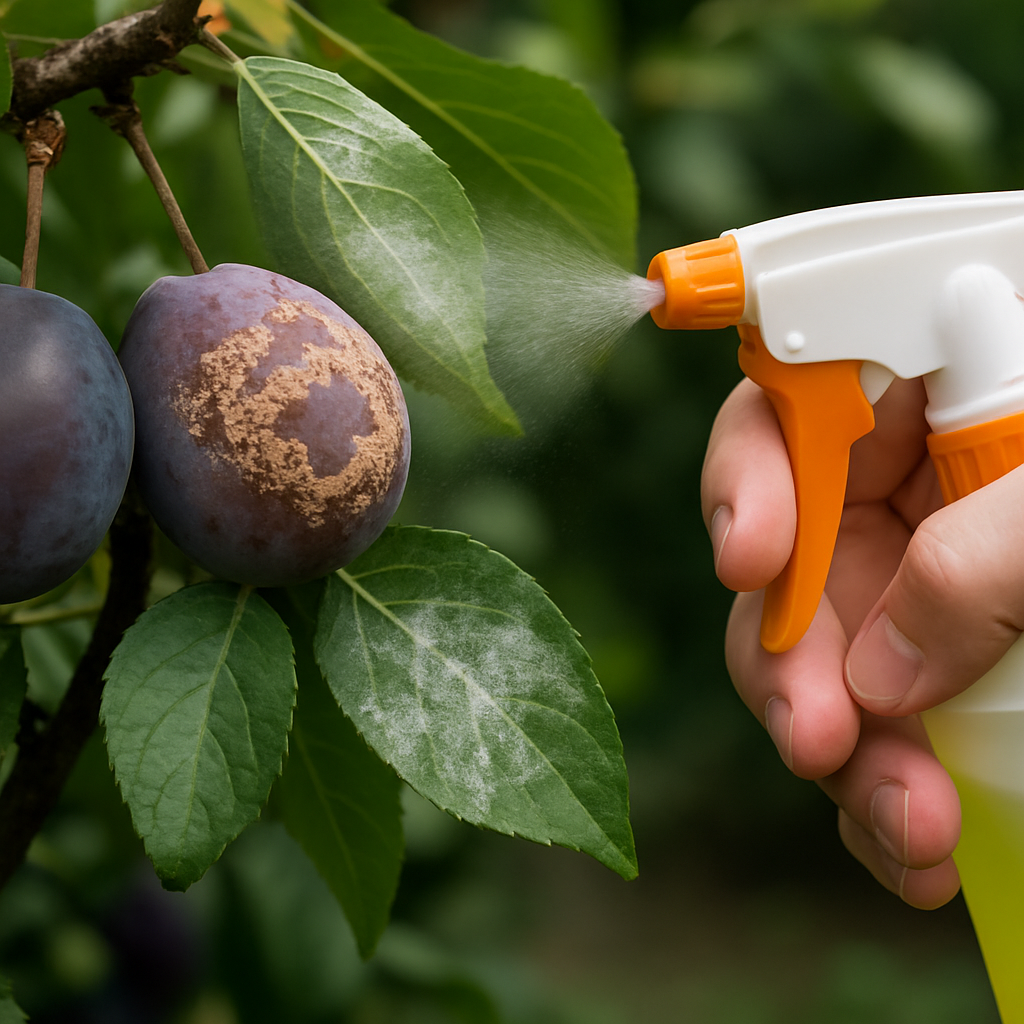
Understanding Brown Rot on Plums and the Role of Fungicides
If you notice shriveled plums with powdery gray spots or sticky sap on your stone fruit trees, you are likely dealing with brown rot, a fungal disease caused by Monilinia fructicola and Monilinia laxa. The core solution for brown rot on plums involves a combination of cultural practices and targeted fungicide treatments. Applying the right fungicide at the proper times, while focusing on sanitation and monitoring for additional issues like powdery mildew, gives your plum trees the best chance to avoid major fruit loss. This guide explains how to approach fungicide use for brown rot, how to recognize symptoms, and which practices work together for season-long protection.
Recognizing the Signs: From Fruit Shriveling to Powdery Mildew
Brown rot in plums reveals itself as fruit shriveling, brown spots on petals, and sticky sap exuding from infected flowers. Over time, affected fruit develop grayish specks and can dry into hard, mummified remnants, which cling to branches or fall beneath the tree. Monitoring these symptoms early gives you the upper hand in applying fungicide treatments before widespread infection sets in.
Be mindful that symptoms sometimes overlap with other common fungal issues, such as powdery mildew, which manifests as a white, powdery layer on leaves or fruit. Since the presence of one disease can weaken plant resistance, identifying all early warning signs helps prioritize your response and prevent further fungal spread.
Regularly clear away fallen fruit and prune out affected twigs to reduce fungus spores that overwinter and spread disease. Both brown rot and powdery mildew favor moist, humid conditions, so managing plant density and canopy airflow can lessen their impact.
Effective Fungicide Options for Brown Rot and Related Fungal Problems
Choosing the right fungicide for brown rot on plums is key to protecting your harvest. Both organic and synthetic options are available, with notable actives like myclobutanil, propiconazole, captan, and sulfur (with certain sulfur formulations being suitable in organic agriculture) offering control when applied correctly. It's crucial to select a product explicitly labeled for stone fruit brown rot, as some fungicides, such as chlorothalonil, are best reserved for early blossom protection and not suitable for direct fruit spray. Refer to the guidance from University of Minnesota Extension for a comprehensive list of effective fungicides and timing advice.
Resistance management is important, so alternate fungicide classes when repeated treatments are needed. For example, if using thiophanate methyl, restrict use to once per year and rotate with another chemistry like pyraclostrobin/boscalid (Pristine) or iprodione (Rovral) to delay resistance build-up.
The University of California IPM program also recommends spraying during bloom and again before harvest, particularly for late-maturing cultivars, to protect the most vulnerable fruit.
For organic growers, sulfur-based products and careful sanitation have proven effective, but thorough coverage and repeat applications are required, especially in wet springs or when powdery mildew is also present.
Always follow product labels regarding application rates, timing, and re-entry intervals to safeguard both your crop and your health.
Timing Strategies: Coordinating Fungicide Applications with Growth Stages
Applying fungicides to green, immature plums is not typically necessary, as these fruit are less susceptible to brown rot infection. The best protection comes from targeting two critical periods: blossom time and pre-harvest. Begin applications when the tree first flowers and repeat as directed until petal fall, since blossom blight can serve as the entry point for future fruit rot.
Switch focus to fruit protection about two to three weeks before harvest, when mature plums become increasingly susceptible. Reapply fungicide if weather conditions remain wet or if symptoms persist. Consistent timing is vital, as missing a spray during a rainy period can allow brown rot or powdery mildew to establish hard-to-control footholds.
Accurate timing also helps preserve beneficial insects by reducing unnecessary applications, making integrated pest management (IPM) approaches more sustainable in both home orchards and commercial settings.
Pruning, Sanitation, and Integrated Disease Management
Fungicides alone cannot fully protect your plums if sanitation is neglected. Remove and destroy any shriveled, infected fruit—these 'fruit mummies' harbor spores that become the primary source of new infections each spring. Prune out any cankered or diseased wood, making cuts at least six inches below the affected area and always disinfecting tools between cuts to avoid spreading spores within the canopy.
Thickets of wild or neglected stone fruit trees, such as plums or cherries, can act as reservoirs for brown rot fungus and powdery mildew. Eliminate or manage these sources near your orchard to reduce spore load and minimize reinfection risk.
Proper pruning to open up the tree canopy increases sunlight and airflow, discouraging fungal establishment and drying out moisture quickly after rainfall or dew. This approach is just as valuable for minimizing powdery mildew, which thrives in shaded, humid environments.
Sanitation and cultural practices complement fungicide programs and together create a strong, integrated defense against both brown rot and related diseases.
Finally, maintaining balanced soil nutrition and irrigation helps your trees resist infection naturally, as overly lush, nitrogen-rich growth is more prone to fungal problems. Watch for other disease indicators on nearby susceptible plants like petunia, hibiscus, or calla lily, adjusting your management plan as needed to protect your entire garden ecosystem.
Best Practices Beyond Fungicide: Monitoring, Record-Keeping, and Yearly Improvements
Effective brown rot and powdery mildew management on plums requires an ongoing commitment to monitoring and adaptation. Keep detailed notes of past outbreaks, fungicide schedules, weather patterns, and the results of both cultural and chemical controls. Adjust your approach based on what worked or failed in previous seasons.
Stay informed about emerging resistance in fungal populations. When using synthetic fungicides such as thiophanate methyl or iprodione, follow local extension updates to avoid ineffective applications. Always rotate with different chemical classes as recommended by experts.
Combine your fungicide program with timely pruning, sanitation, and IPM scouting for best results. If other fungal problems like powdery mildew or minor stem blights are appearing elsewhere in your garden—whether on strawberries, cucumbers, or ornamentals like African violet and monstera—recognize overlapping risk periods and adjust protective actions accordingly.
Finally, balance all interventions with an eye toward pollinator and beneficial insect safety. Do not apply fungicides during peak bee activity or excessively beyond label recommendations. By combining vigilant observation and sound management, you can greatly reduce crop loss and build stronger, healthier plum trees year after year.
If brown rot continues to threaten your plums despite careful steps, consult your state extension or visit reliable online resources for customized advice, such as Melinda Myers' guide to brown rot on plums.
With the right care, the threat of brown rot and associated fungal diseases like powdery mildew can be managed for a productive, healthy orchard season after season.
Comments
Post a Comment