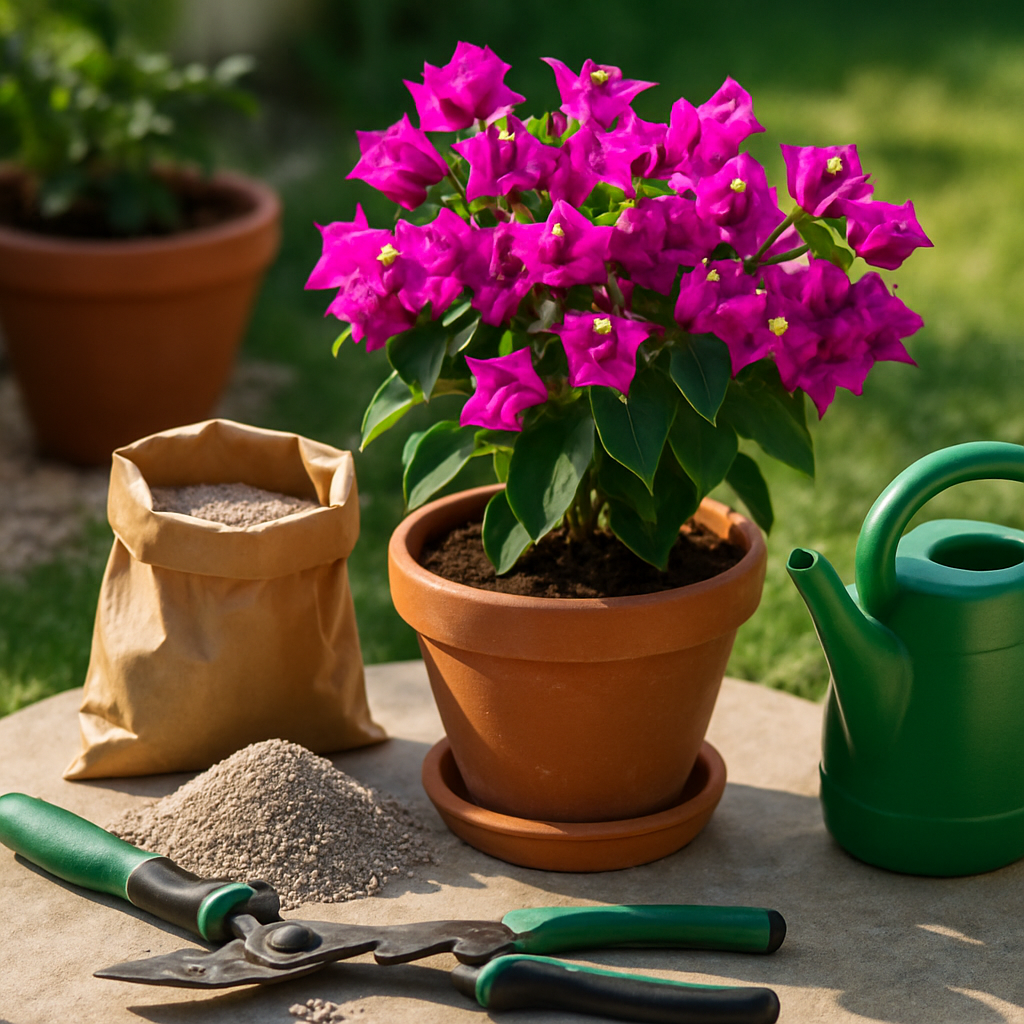
If you want your bougainvillea to deliver dazzling blooms and healthy foliage, feeding it with the right fertilizer and following a strict care routine stand at the heart of your success. This plant thrives on abundant sunlight, needs deep yet infrequent watering, and demands a robust, well-timed feeding schedule—especially for bougainvillea flowering in pots. If your goal is brilliant colors, frequent blooms, and a manageable shape, understanding fertilizer use and pruning at the right seasonal moments will make all the difference (source).
Flowering in Pots: The Fertilizer Strategy That Works
Potted bougainvilleas, whether dwarf or full-sized, require more attentive feeding routines than those rooted in the ground. Container plants tend to exhaust their soil nutrients quickly due to watering frequency and limited root space. Start with a well-draining soil mix to prevent root rot, ensuring your bougainvillea's roots stay healthy—this directly impacts bloom production.
For achieving prolific flowering in pots, opt for a balanced fertilizer that is high in potassium and phosphorus but not overloaded with nitrogen. Bougainvilleas react well to a heavy feeding every 2 to 3 weeks during their active bloom cycle and right after. There are specialty products designed for bougainvillea, but many gardeners have success with homemade solutions like compost teas or diluted fish emulsion, provided the ratios encourage flowering instead of leafy growth (Monrovia Guide).
Watering routines play into fertilizer effectiveness, too. It's best to let the pot dry out between each deep watering, which keeps the plant healthy and prevents nutrient leaching. Water thoroughly so the fertilizer is absorbed deeply, not just at the surface.
How and When to Prune for Better Blooms
Bougainvillea pruning is more art than science, but regular, aggressive trimming is vital for both shape and flower production. Right after a major bloom, cut back long, unruly stems to stimulate branching—these new branches are where fresh blooms will emerge next cycle. Pruning hard at the end of summer or just after flowering ensures that your pot or landscape bougainvillea puts its energy into producing colorful bracts instead of leggy, leafy growth.
This technique is especially important for plants coming out of winter dormancy, as removing old wood spurs vigorous growth and prevents the plant from becoming woody and flower-shy. For bougainvillea pruned into tree forms, always keep the trunk clear of suckers and focus on shaping a balanced canopy, adjusting your technique slightly depending on the variety's growth habit and your preferred aesthetic.
Regular pruning also addresses another common issue—bougainvillea dropping leaves, which can be triggered by irregular care or moving the plant too frequently between outdoor and indoor environments. Keep your routine consistent for best results (BOUGAINVILLEA CARE SHEET).
Watering and Protecting Bougainvillea from Frost
Watering is central to bougainvillea care, whether grown in pots or planted directly into the landscape. Letting the soil dry out between waterings encourages the roots to grow strong and avoids setting up conditions ripe for fungal diseases. Only water deeply once or twice each week depending on the season, climate, and growth stage; avoid light, frequent watering which encourages shallow roots and reduces resilience.
Bougainvillea is sensitive to temperature extremes, particularly frost. If you're gardening in a region prone to cold winters, keep your bougainvillea in pots and move them to protected locations or indoors when temperatures threaten to drop below 40°F. A thick mulch around the roots in outdoor beds can insulate the base and sometimes allows hardy varieties, like 'San Diego Red', to bounce back even after temperatures dip as low as 20°F, provided rootstock survives.
Foliage dropping is often the first sign of temperature or watering stress. If the plant transitions suddenly from outdoor heat to cooler, less sunny indoor environments, it may shed leaves and bracts as a survival response. Aim for gradual transitions and maintain consistent watering and light exposure when making any environmental changes (The Spruce).
Bougainvillea Fertilizer Homemade Options and Commercial Choices
Home gardeners frequently turn to homemade bougainvillea fertilizer using accessible ingredients such as banana peel tea (for its potassium), bone meal for phosphorus, and well-aged compost for micronutrients. While these can work for supplementing soil fertility, it's essential to balance homemade mixes so the nitrogen doesn't overpower the phosphorus and potassium—excess nitrogen means more green growth and fewer flowers.
For those who prefer convenience, commercial bougainvillea fertilizers, including those sold at major stores like Home Depot or Amazon, are widely available and are often tailored to boost blooming cycles. Look for products with labels such as "flower booster" or fertilizers formulated for tropical or flowering plants. These products simplify feeding because they contain the right ratios needed for maximizing display.
Some gardeners create a schedule, alternating between liquid feeds with every watering and using a slow-release granular fertilizer every few months. Take care not to overfeed—more is not always better and can result in fertilizer burn or weak, leggy growth. Follow dosing directions carefully and observe how your plant responds to tweak your routine.
Potted Plant Placement and Indoor/Outdoor Transitions
Bougainvillea does best in full sun, receiving at least six hours of direct light daily. Indoors, place your pots in the sunniest spot possible, such as a south- or west-facing window. Outdoor locations should be protected from drying winds but never shaded by large trees or structures, since lack of sunlight reduces the bloom show.
For those in cooler zones, timing is everything when moving pots between indoors and outdoors. Transition gradually to prevent shock and dropping leaves—start by placing the plant outdoors in increasing increments of time once daytime temperatures are reliably warm. Avoid sudden movement, as bougainvillea thrives in stable, predictable conditions.
If you notice yellowing or falling leaves, review your watering, feeding, and lighting—these signs usually indicate correcting one (or all) of these factors is necessary. Mistakes can be reversed, but bougainvillea always rebounds best when given proper sunlight and left to dry out between deep watering sessions. Regular, appropriate feeding ensures that even after tough weather or relocation, your plant returns to lush health and vibrant color.
Whether you're tending to a thriving landscape specimen or growing a potted centerpiece, fine-tuning your bougainvillea care brings rewards in the form of sustainable, show-stopping blooms.
Comments
Post a Comment